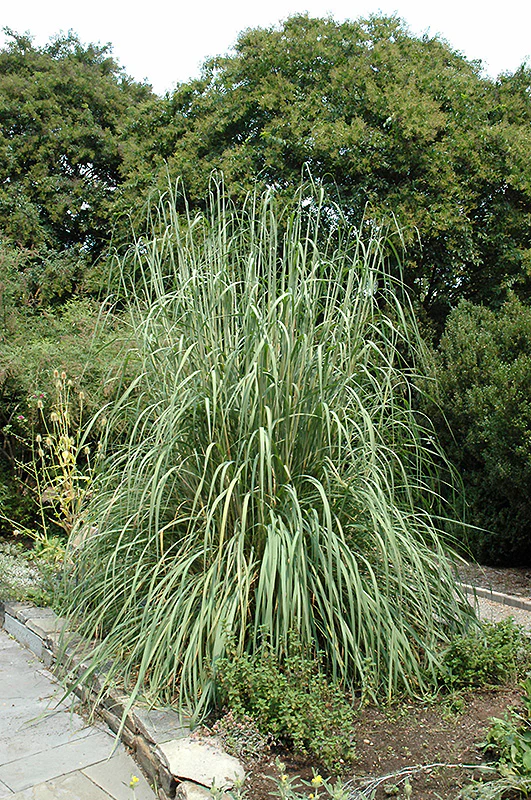
Erianthus ravennae
Pampas Grass will grow to be about 5 feet tall at maturity extending to 12 feet tall with the flowers, with a spread of 8 feet. It grows at a fast rate, and under ideal conditions can be expected to live for approximately 10 years. This plant should only be grown in full sunlight. It is very adaptable to both dry and moist growing conditions, but will not tolerate any standing water. It is not particular as to soil pH, but grows best in sandy soils. It is highly tolerant of urban pollution and will even thrive in inner city environments. This species is native to parts of North America. It can be propagated by division.
Pampas Grass will grow to be about 5 feet tall at maturity extending to 12 feet tall with the flowers, with a spread of 8 feet. It grows at a fast rate, and under ideal conditions can be expected to live for approximately 10 years. This plant should only be grown in full sunlight. It is very adaptable to both dry and moist growing conditions, but will not tolerate any standing water. It is not particular as to soil pH, but grows best in sandy soils. It is highly tolerant of urban pollution and will even thrive in inner city environments. This species is native to parts of North America. It can be propagated by division.
Original: $7.65
-70%$7.65
$2.29Description
Pampas Grass will grow to be about 5 feet tall at maturity extending to 12 feet tall with the flowers, with a spread of 8 feet. It grows at a fast rate, and under ideal conditions can be expected to live for approximately 10 years. This plant should only be grown in full sunlight. It is very adaptable to both dry and moist growing conditions, but will not tolerate any standing water. It is not particular as to soil pH, but grows best in sandy soils. It is highly tolerant of urban pollution and will even thrive in inner city environments. This species is native to parts of North America. It can be propagated by division.